
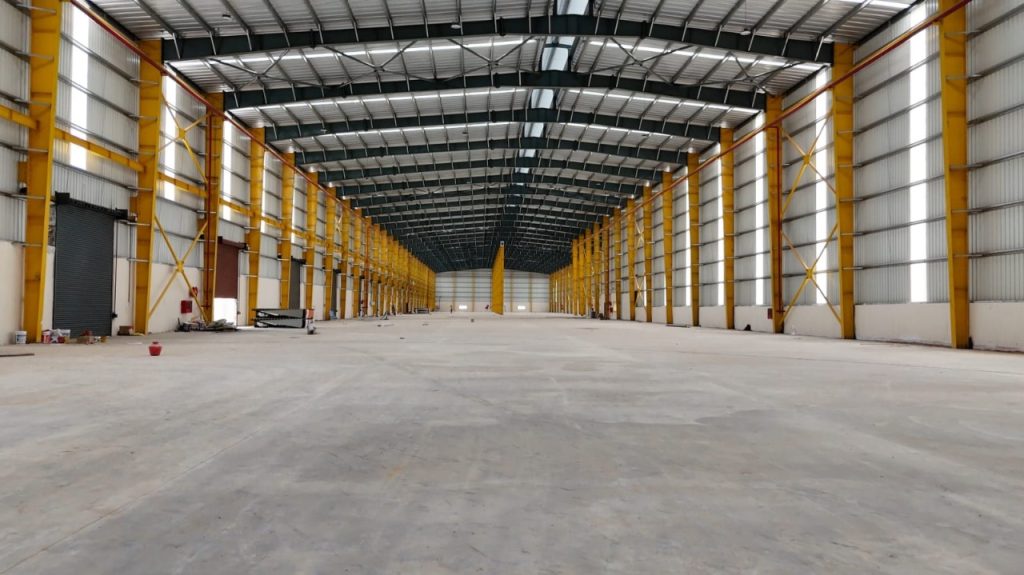
How to Rent a Warehouse in Ahmedabad: Your Complete Guide

Renting a warehouse in Ahmedabad can feel like navigating a complex maze, but with the right information, the journey becomes straightforward. Whether you’re a small business owner or a large enterprise, finding a warehouse tailored to your needs in Ahmedabad is crucial for efficient operations. In this blog, we’ll walk you through every step, provide expert tips, and outline common pitfalls to avoid.

Introduction: Why Ahmedabad for Warehousing?

Ahmedabad is more than just a business hub; it’s a logistics powerhouse. The city has become a prime spot for warehousing and distribution with its strategic location, strong connectivity, and thriving industrial sectors. From Narol to Sanand and beyond, Ahmedabad offers a variety of warehouses designed to meet different business needs. But how do you ensure you’re making the right choice? Let’s break it down.

1. Understanding the Warehouse Market in Ahmedabad

The demand for warehousing in Ahmedabad has surged thanks to e-commerce, manufacturing, pharmaceuticals, and FMCG sectors. Warehouses are in high demand, leading to a competitive market where prices range between ₹15 to ₹25 per square foot, depending on location, size, and facilities.

  • Trending Areas: Narol, Sanand, Changodar, and Aslali are some of the preferred locations due to their excellent connectivity and industrial infrastructure.
  • Pro Tip: Rental prices and availability may vary based on market trends and industry demand. Stay updated by monitoring property portals or working with specialized real estate agents.

2. Types of Warehouses Available

Ahmedabad offers a diverse range of warehouse options to suit different business requirements:

  • Standard Warehouses: Perfect for businesses needing simple, large storage spaces for dry goods.
  • Cold Storage Warehouses: For temperature-sensitive products like food, beverages, and pharmaceuticals.
  • Distribution Centers: Strategically located for rapid shipping and receiving, commonly used by e-commerce companies.
  • Industrial Sheds: Ideal for light manufacturing or packaging alongside storage.
  • RCC and Pre-Engineered Buildings (PEBs): Provide high durability and are suitable for large-scale industrial activities.

3. Choosing the Right Location

Location can make or break your logistics efficiency. Here are some of the popular options:

  • Narol and Aslali: Great connectivity to highways, ideal for distribution. However, traffic congestion may pose challenges.
  • Sanand and Changodar: Offer modern industrial infrastructure but are located slightly away from the city center.
  • SP Ring Road: Provides seamless connectivity for intracity and intercity distribution.

Tip: When choosing a location, consider proximity to key markets, transportation hubs, and your customer base.

4. Legal Requirements for Renting a Warehouse

Navigating the legal aspects can be tricky, but it’s necessary:

  • Lease Agreement: Ensure you have a detailed lease agreement outlining the rental terms, payment schedule, maintenance responsibilities, and other important clauses.
  • Occupancy Certificate (OC): Verify that the warehouse complies with local building codes and regulations.
  • No Objection Certificate (NOC): Check if required from relevant authorities based on your business operations.
  • GST ComplianceGST registration may be mandatory if you use the warehouse commercially.
  • Other Documents: Verify property tax receipts and utility bills for the warehouse.

5. The Warehouse Rental Process

Renting a warehouse involves these key steps:

  1. Define Your Needs: Determine the warehouse’s size, type, and location based on your business requirements.
  2. Explore Listings: Use online platforms like India Warehousing or engage with local real estate agents.
  3. Inspect Properties: Visit potential warehouses to assess their condition, infrastructure, and accessibility.
  4. Negotiate Terms: Discuss rental rates, deposit amounts, lease duration, and any special terms with the landlord.
  5. Due Diligence: Verify the property’s legal status and ensure compliance with regulations.
  6. Sign the Lease: Finalize the deal by signing a comprehensive lease agreement.

6. Key Factors to Consider

When selecting a warehouse, consider:

  • Size and Capacity: Make sure the space meets your storage needs now and in the future.
  • Accessibility: Consider proximity to highways, transport hubs, and markets.
  • Safety Measures: Check for fire safety equipment, pest control, and structural integrity.
  • Infrastructure: Adequate utilities, loading docks, and parking are essential for smooth operations.

7. Avoid These Common Pitfalls

  • Neglecting Location Challenges: Be mindful of traffic patterns and potential delays in high-traffic areas.
  • Ignoring Legal Documentation: Always cross-check ownership and permits.
  • Overlooking Hidden Costs: Clarify all charges, including utilities and maintenance, in advance.
  • Not Planning for Growth: Choose a warehouse that can accommodate your future business needs.

Conclusion

Renting a warehouse in Ahmedabad doesn’t have to be complicated. By understanding the market, considering all the key factors, and seeking professional guidance, you can find the perfect space for your business. Whether you need a small warehouse or a large industrial unit, India Warehousing is here to simplify the process.

Ready to find the perfect warehouse? Contact India Warehousing today and let us help you make the right move for your business!

Also Read

How to Rent a Warehouse for Business in Gujarat?

How to Rent a Warehouse for Business in India?

How to Rent a Warehouse for Business in Surat?

How to Rent a Warehouse for Business in Vadodara?

How to Rent a Warehouse for Business in Sanand?

How to Rent a Warehouse for Business in Ankleshwar?

How to Rent a Warehouse for Business near me?

Reasons for Popularity of Metal Roofing

Long Life / Durability: In some of the most challenging commercial applications where sustained exposure to dirt, wind and industrial pollution are nearly unavoidable, properly installed alloy-coated steel roofs any significant maintenance is required. Even in coastal areas prone to continuing salt spray, the alloy coatings are capable of protecting the steel substrate from corrosion. 

Good Looks/Aesthetics: Modern high-speed roll forming processes shape steel into versatile, eye-catching design, with a verity of profiles in appealing colors. They keep their good looks for decades, not just a few years. 

Low Life Style Costs: Obviously, durability and continued aesthetic appeal help lower the overall life cycle costs of the roof. 

Weather Resistance: Steel has commendable ability to shed water especially with today’s new corrosion -resistant alloy coatings. Besides water, steel also sheds snow quickly, thus reducing the tress on a roof during winters. Its inherent strength combined with profile design strength ensure roof will not crack, split or break when struck by strong winds. 

Fire Resistance: We can expect steel to burn and steel’s fire resistance can help slow the spread of fire within a building. 

Light Weight: Steel roofing systems typically are of lighter weights then many other roofing systems. It therefor helps to reduce costs. It does this by reducing the need for reinforcement required when heavier roofing is used. 

Re-roofing Ease: Light Weight is an important advantage. Steel roofs often can be installed over existing roofs with little or no modification. This saves time, labour as well as the cost of cleanup and disposal. 

Environmental Appeal: Metal roofing not only eliminates the need for frequent replacements, it also is recyclable if the roof eventually is removed. Steel roofing systems are virtually 100 percent recyclable and can be recycled over and over again without ever losing quality. 

Energy Savings: Steel roofing offers high thermal performance, dissipating heat quickly in warm climates. 

Low Maintenance: Like most of today’s low-maintenance exterior products, steel roofing systems require minimal care. A few basic steps include an annual inspection of the roof, cleaning the roof from accumulated debris, and checking roof-top ancillaries to ensure that they are properly drained and supported so that pounding water is avoided. 

Allergens: Unlike some other traditional materials steel is not vulnerable to insect, mold or not, Therefor, it does not require the application of insecticides or other hazardous chemicals. Moreover, steel does not host allergens or other irritants. This makes steel the best choices for “Green” Building, where the goal is to reduce or eliminate the introduction of chemical substances. Return on Owner’s Investment: Steel roofing systems offers great usable life spans. As a result, a Steel roofing system adds significantly to the resale value of a building. IndiaWarehousing offers a wide variety of metal roofing systems from traditional shingles to batten seam panels that allow for unlimited design flexibility and creativity. It is a leading roofing company and pioneer of fastest self supported, steel roofing system in India.

Wooden Pallets is an integral part of Warehousing business, with its wide acceptability and varied usage it has become the heart of warehousing business. They are responsible for protecting the product during transit, speeding up the loading and unloading, and providing more efficient storage in your warehouse.

Commonly used for storage of different products, it can handle material from small boxes and bins to specially packaged heavy loads and drums & barrels. Pallets are used to stack, store, protect, and transport materials in the course of being handled by pallet handling equipment such as forklifts, pallet jacks or conveyors, being stored in racking or bulk storage or being positioned in transport vehicles.

Different types of pallets which are very common in warehousing usage are 2WayPallets and 4WayPallets which used for Palatalized stacking of goods on racks. The best part of wooden pallets is it can be modified as per requirement even after its final production, whereas this cannot be done in case of PlasticPallets.

Plastic Pallets on other hand cannot be modified once it is manufactured. Plastic pallets are water resistant and so even if it is used in rough weather or water born areas it can sustain for long time unlike wooden pallets, which are tend to bend if exposed to water / humid weather for long time.

Apart from warehouse use, there are many more creative ways where a discarded pallet can be used. If modified and decorated well it can be used as Standing Garden, Coffee Table, Shoe Rack, Book Shelf and Toy bins, Swings etc.

IndiaWarehousing is a leading service providers from India of storage space, storage space rentals and goods storage for warehousing business. Contact for best Investment Opportunity in warehousing business.

Also Read: Actionable Tips on How to Start a Warehousing Business

Tips to increase storage capacity in a small warehouse

Racking System is the answer to your problem. A proper racking system installed can be of great use when you have a limited ground storage space. You can make a maximum use of your warehouse when the storage is done vertically in a well-designed racking system.

Yes, @IndiaWarehousing we do site inspection to tell you which type of Racking System will best fit your need and budget.

There are different types of racks available which can be customized as per the need. The best part about Racking System is, it can be fitted in as per the need.

Warehouse Space Optimization Techniques

Some most commonly used racking systems are: Industrial Racking Storage System, Heavy Duty Racking System, Pallet Racking System, and Multi tire Racking System, Slotted Angle Racks etc.

Heavy Duty Racking System:

Heavy Duty Storage Racks are widely used for storage of raw material; Semi finished and finished products in any Industry.

  • The main advantage of Heavy Duty Racks is:
  • Customized design as per available space on site
  • Design is purely based on the material to be stored
  • Design is being decided on the load bearing capacity
  • Easy to Install and Can be shifted to any place easily

Pallet Racking System:

Pallet rack is a material handling storage aid system designed to store materials on pallets. Forklift trucks are an integral part of any pallet rack system as they are usually required to place the loaded pallets on to the racks for storage. Pallet Racking is a great solution for heavy stock capacity.

The Main advantages of Pallet Racking Systems are:

  • Bulk Storage of materials
  • Quick access to all SKU’s
  • Allows you to work with verities of inventory control methods
  • Complete customization options
  • Optimized safety of storage area
  • Reduce amount of time in handling of materials
  • Capitalize on Sq. Ft. Space

Along with racking system which increases your storage area, a well-designed Mezzanine floor will increase your work area to its maximum capacity. How?

Mezzanine is a cost effective solution to increase your storage and production area by utilizing the existing unused vertical space in your warehouse. Mezzanine can be installed in high ceiling spaces to optimize vertical space. These semi-permanent steel structures / platforms are most often more affordable then building renovations.

Benefits of Mezzanine:

  • Efficient Space Utilization
  • Better Equipment Access
  • Saving construction Cost
  • Saving Expansion Related Expenses
  • One time investment
  • Meeting growth demands
  • No waiting period – Ready to install

Ideal Use for Mezzanines:

  • Catwalks and Walkways for equipment and other building access
  • Bulk Storage Space
  • Equipment and Production Platform
  • Conveyor Support
  • Office or Viewing Tower elevation
  • Full pallet storage
  • Shelving Support for parts storage
  • Crossover Bridge
  • High Density parts storage
  • Elevated work platforms

For more details mail us on info@indiawarehousing.in

Also Read:

Business Plan for Warehousing and Logistics

Business Ideas for an Empty Warehouse

First in simplest words – You should know your customers, your market, your area geographically and most important your budget…

Let us start by evaluating the basic things one by one.

Actionable Tips to Start a Small Warehouse Logistics Business

#Know your customers:

Always first ask why? to each of your ideas… Why you want to start Warehouse Logistic Business? Why people will come to you when there are already established operators… Why people will choose / select you leaving away the established ones…

Answering your each Why’s thoroughly will make you a better warehouse service provider.

Survey / study your market first. See who all are established players in your region? What services they provide? What type of customers and commodity they handle? What is their investment in business? Consider the warehouse rent / salary and other operational costs carefully.

#Warehouse rent:

Check in your local area of operations what is the existing rent of a small warehouse? This is usually quoted on per sq. ft. basis, check the monthly maintenance and property tax amount and who will pay this amount?

#Your client:

KYC is the key to success. Know your customer is the most important aspect of starting small warehouse logistic business.

  • You should know the material you have to handle, the packaging size, type of package, storage type (whether it has to be stacked on racks / pallets / on the floor / height of stack etc.)
  • Monthly movement of stock from client premises to warehouse to distribution channel / client. Maintaining the inward and outward record is most important in this business. Proper labeling / marking / tagging of each batch of goods, handling the loading and unloading of goods, transporting the same to various places without damaging the goods. On time delivery of goods as per requirement.
  • If you are handling multiple clients and products together you have to be very sure that material doesn’t gets mixed up while stacking and delivering the goods. Keep separate marking of space for better handling.

Once you are ready with the client product knowledge, next important thing is terms of contract.

#Terms of Contract:

You should keep in mind the following things when taking up the contract.

  • Frequency of material handling and movement.

This will help you in establishing the transportation cost and manpower cost for loading and unloading of goods.

  • Pickup and Delivery Destination

This will help you understand the cost of logistic involved. If the material is to be picked up from and delivered to one location or multiple locations. This will also help you in taking the cost of transportation in consideration.

  • Reporting:

Submitting the material movement reports on daily / fortnightly / monthly basis. Keeping the relevant documents ready to be submitted with the report.

  • Payments:

When the payment will be released from the company? On daily / fortnightly / monthly basis. If the company is paying you on monthly basis then you should have sufficient money backup to run your day to day show. As you will need to make some payments on daily basis, and so sufficient money backup will help you to run the show.

Once you are ready with mutually agreed terms of contract then comes up is size and location of your warehouse.

Knowing the monthly quantity of goods you have to handle, you can decide on the size of warehouse you will require to store the goods. While deciding on the warehouse, you should keep these important points in mind before finalizing the space.

#Location:

  • Location of warehouse.
  • Accessibility from the main road / highway.
  • Approach road to warehouse.
  • Delivery vehicle movement.

#Type of warehouse:

There are different types of warehouse. Some have RCC roof and are fully constructed with civil work. Some are combination of RCC / Civil work and PEB (Pre Engineered Buildings) and some are complete PEB Structures.

  • Consider the type of construction of warehouse
  1. Civil + RCC
  2. Civil + PEB
  3. PEB + RCC
  • Height of warehouse from center and side.
  • Width of shutter and number of shutters
  • Floor loading capacity per sq. meter. (Specially need to consider if the material is heavy)

#Additional Facilities:

  • Security of warehouse (Manned OR CCTV Surveillance)
  • Water and Power availability
  • Distance from key establishments like hospital / police station / bus stop / nearby village etc.
  • Transportation and Logistic service providers.

Once all the above points are taken into consideration you are almost set to start your business. You have to be mentally prepared to face the unforeseen circumstances which come with every business. But, if the basic principles of business are followed the chances of failure are very less.

IndiaWarehousing is a leading service providers from India of storage space, storage space rentals and goods storage for warehousing business. Contact for best Investment Opportunity in warehousing business.

Also Read: How to Start a Warehousing Business in India?

A successful business plan for warehousing and logistics business need in-depth knowledge of supply chain, geographical knowledge and cost effective transportation methods.

Best Business Plan for Warehousing and Logistics

The basic difference between Warehousing and Logistic is, warehousing means art of storage goods, making maximum use of available space for storage of goods ( Raw and Finished) and Logistic means art of transportation of goods from one place to another with minimum breakage or loss or spillage within the best given time.

Warehouse business plan

If you are a new entrant in to the business of warehousing then you need to know the potential areas within your city or its outskirts from where connectivity to other parts of the world is excellent. Apart from good location of your warehouse you should have proper warehouse infrastructure in place which consists of properly build warehouse with modern facilities like in-house office for staff, storage facility like racks and pallets, material handling equipments like pallet trucks Or forklifts, cranes for movement of heavy goods, dock levelers for easy movement of goods from truck / trailer to the floor of warehouse, weighing bridges, manpower to operate this equipments.

Once you have a proper warehousing infrastructure in place then after you can either out source your logistic part with excellent arrangement of transportation of goods from you warehouse to other part of country / world Or you can have your own logistic / transportation fleet of trucks and trailers.

Also Read: Investment Opportunity in Warehousing Business in India

Logistics business plan

To create your own fleet you should carefully plan your purchase of these vehicles which can transport good to the last mile into the city. Big truck or trailer for intercity transportation, small truck / tempo intra city transportation and even smaller vehicles for last mile delivery of goods.

If you are into active warehouse management and operation then you might also need packaging materials for repacking of goods like corrugated boxes, sealant tapes, plastic wraps, bubble wraps, wooden boxes for heavy goods etc.

The key to successful warehousing and logistic business is operating / storing / transportation of goods and delivery of goods in time with no or minimum breakage or loss or spillage or wastage of material during transportation.

India Warehousing is a leading service providers from India of storage space, storage space rentals and goods storage. Get industrial plot for sale or rent, Warehousing sale or rent, Industrial land sale of rent in India.

Also Read: 

Actionable Tips on How to Start a Warehousing Business

How will you increase your storage capacity in a small warehouse?

Copyright © 2026 India Warehousing | All Rights Reserved | Website Designed & Promoting by DynaSoft