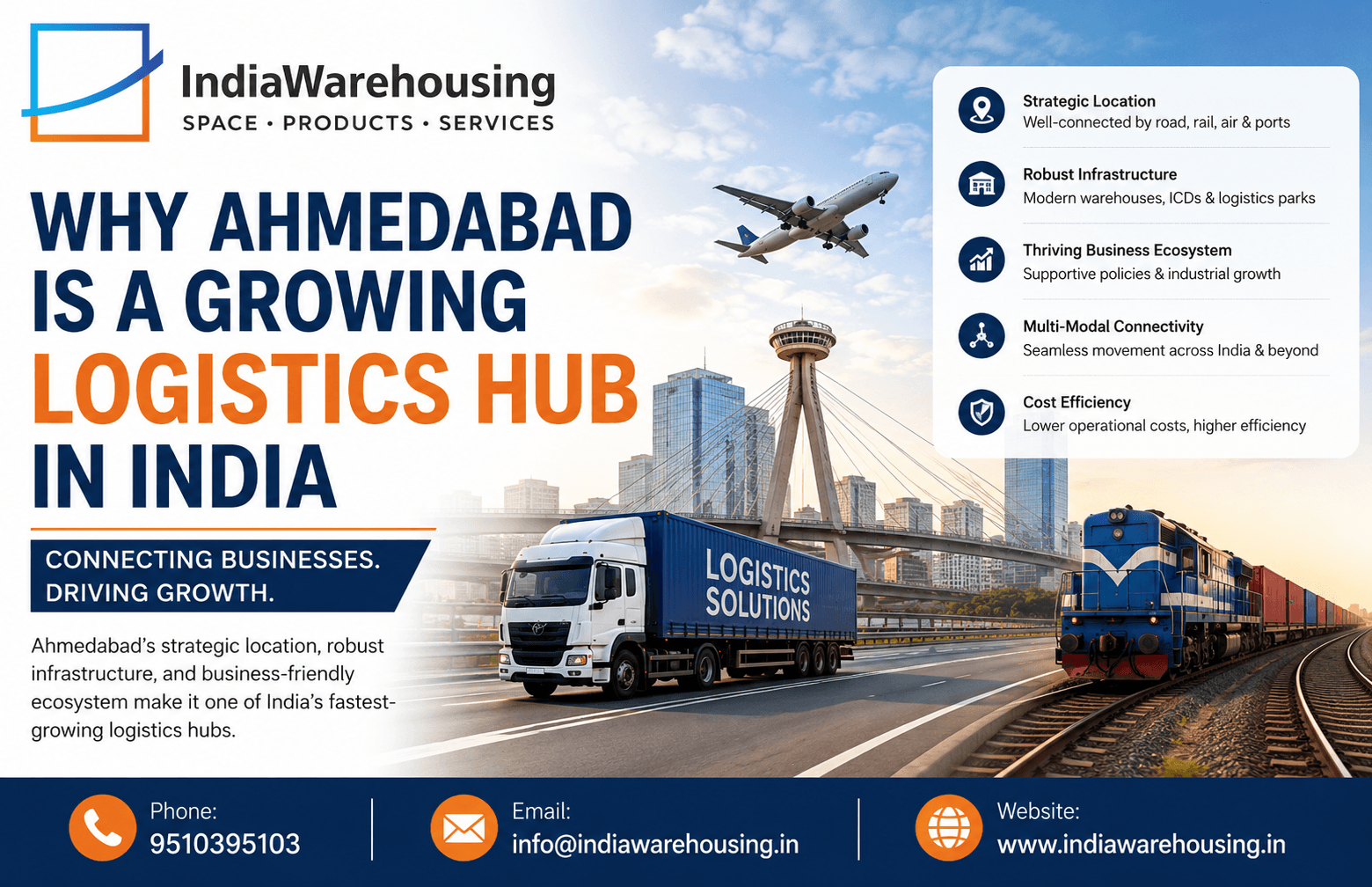
Ahmedabad has rapidly emerged as one of India’s most important logistics and warehousing destinations. Strategically located in western India, backed by world-class infrastructure, strong industrial growth, and progressive government policies, the city is now a preferred hub for manufacturers, e-commerce companies, 3PL providers, and distributors.
In this in-depth guide, we explore why Ahmedabad is becoming a logistics powerhouse, what makes it attractive for businesses, and how it compares with other Indian logistics hubs.
Why Is Ahmedabad a Growing Logistics Hub?
Quick Answer: Ahmedabad is a growing logistics hub because of its strategic location near major ports, excellent road and rail connectivity, availability of Grade-A warehouses, lower operating costs, skilled workforce, and strong industrial and e-commerce demand across Gujarat and western India.
Strategic Location Advantage of Ahmedabad
Ahmedabad sits at the heart of Gujarat, India’s most industrially progressive state.
Key Location Benefits
- Close proximity to Mundra, Kandla, Pipavav, and Hazira ports
- Direct access to Western Dedicated Freight Corridor (DFC)
- Central distribution point for Gujarat, Rajasthan, Maharashtra, and Madhya Pradesh
- Ideal for pan-India and export-oriented logistics
This geographical advantage allows faster movement of goods, reduced transit time, and lower freight costs.
Excellent Road Connectivity and Expressway Network
Ahmedabad is one of the best-connected cities in India by road infrastructure.
Major Highways and Corridors
- NH-48 (Delhi–Mumbai Industrial Corridor)
- NH-47 (Ahmedabad–Vadodara–Mumbai)
- Ahmedabad–Dholera Expressway
- SP Ring Road connecting industrial clusters
These road networks make first-mile and last-mile delivery highly efficient, especially for e-commerce and FMCG companies.
Strong Rail & Freight Infrastructure
Rail logistics is a major strength of Ahmedabad.
Rail & Freight Advantages
- Part of the Western Dedicated Freight Corridor (WDFC)
- Major container rail terminals nearby
- Faster movement of bulk and containerized cargo
- Reduced logistics cost for heavy industries
This makes Ahmedabad a preferred hub for multi-modal logistics operations.
Proximity to Major Ports Boosts Export Logistics
Gujarat handles over 40% of India’s port cargo, and Ahmedabad benefits directly from this.
Nearby Ports
- Mundra Port
- Kandla Port
- Pipavav Port
- Hazira Port
Businesses operating from Ahmedabad enjoy shorter port transit times, making it ideal for:
- Export-import businesses
- Manufacturing units
- International e-commerce sellers
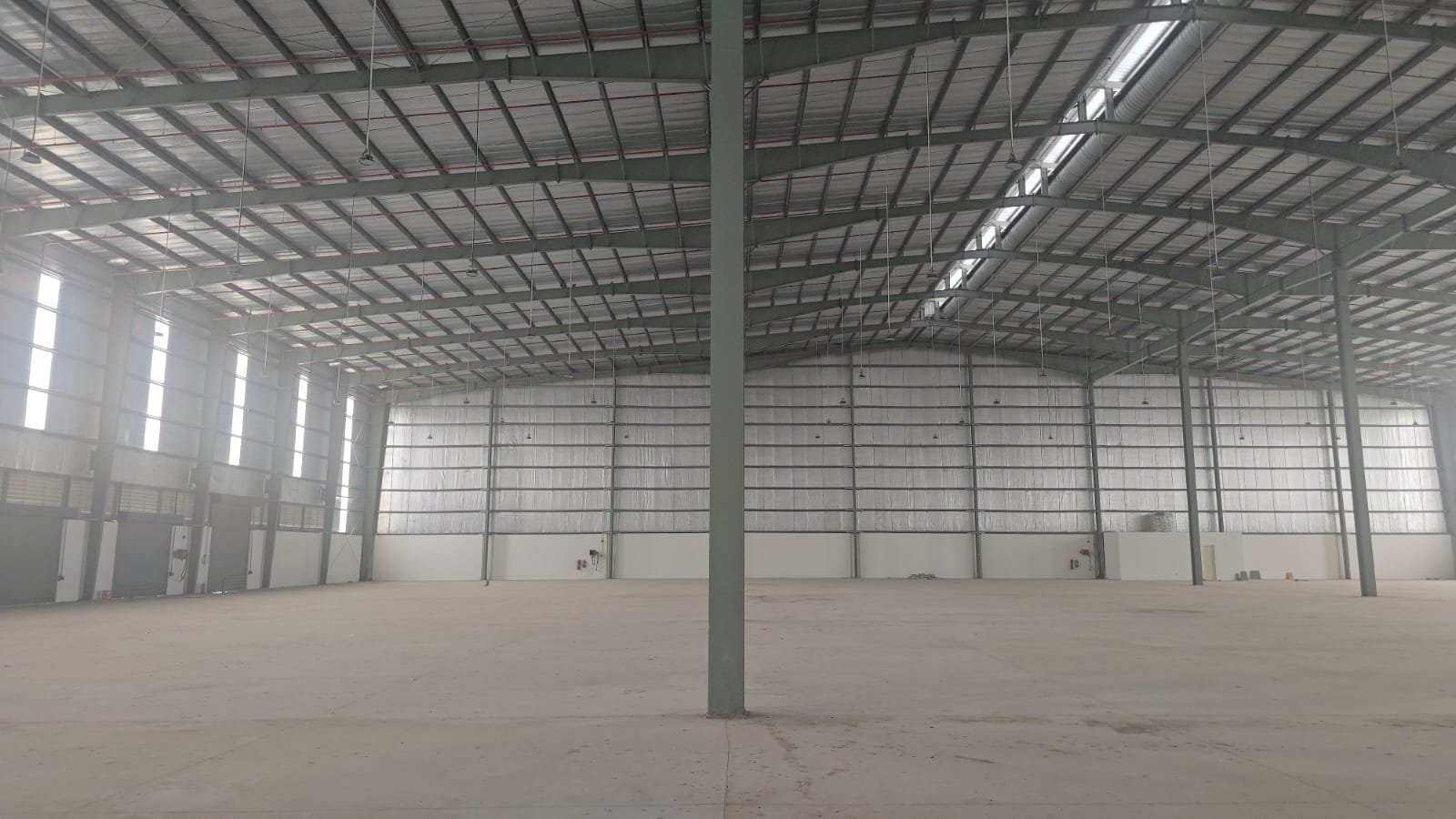
Availability of Grade-A Warehousing Infrastructure
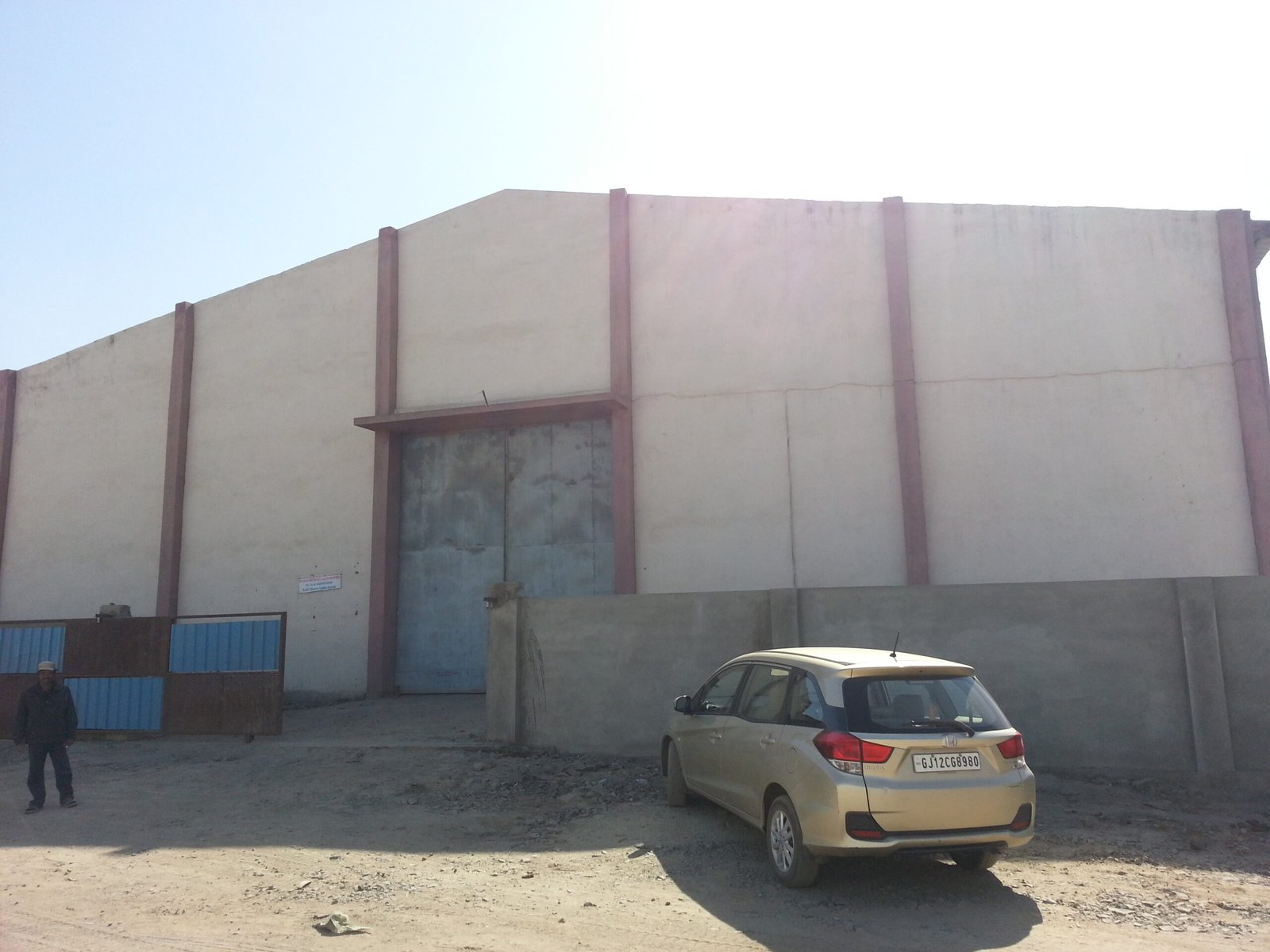
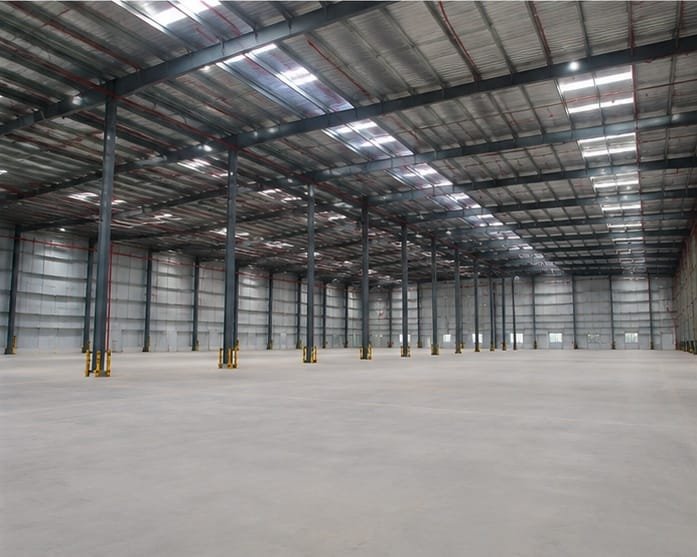
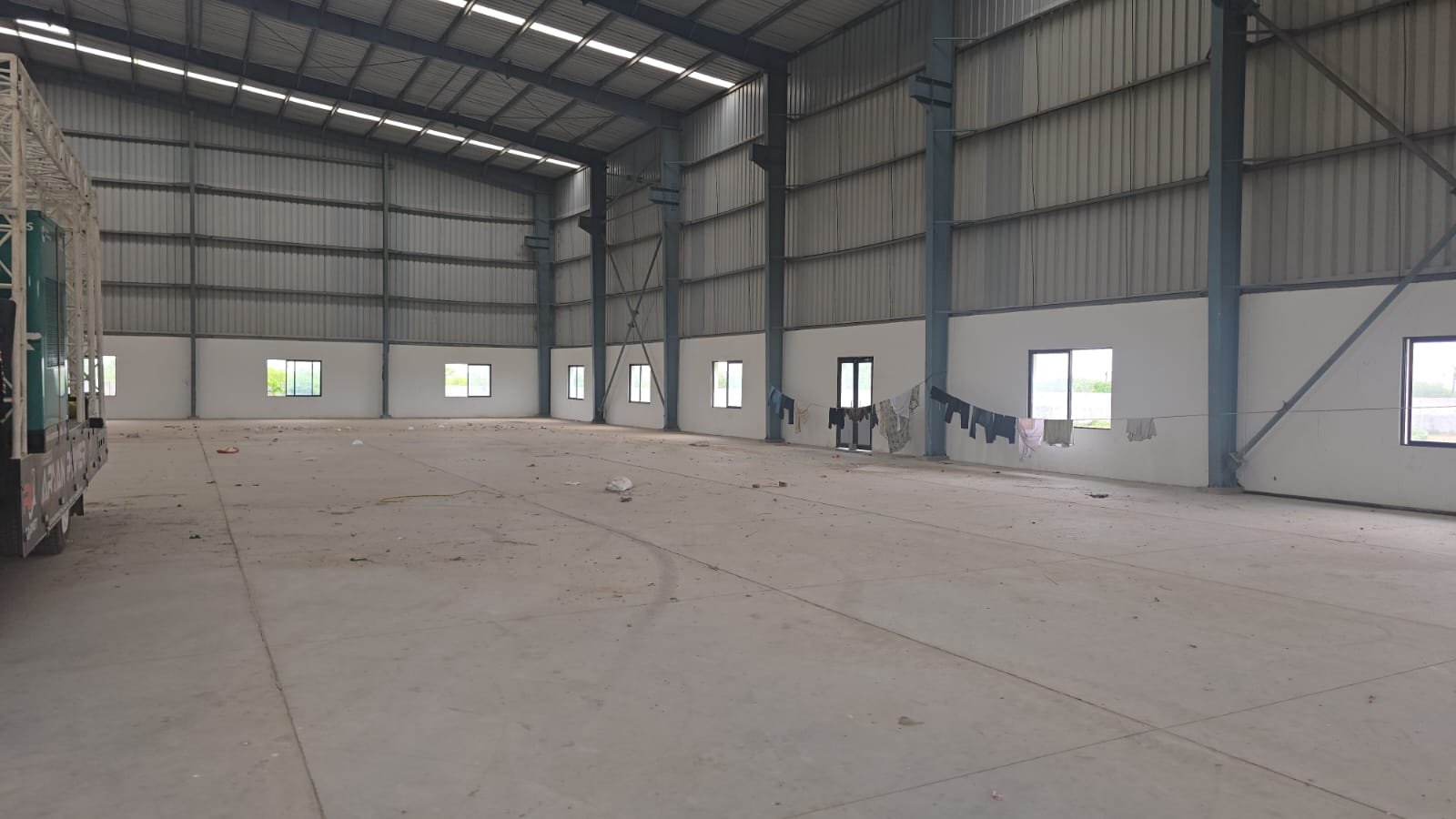
Ahmedabad has witnessed a surge in Grade-A warehouse developments.
Popular Warehouse Locations Around Ahmedabad
- Changodar
- Sanand
- Bavla
- Vatva
- Aslali
- Dholera SIR
Key Features
- Large floor plates
- High clear height
- FM2 flooring
- Dock-level loading
- Fire & safety compliance
- Ample parking and maneuvering space
These facilities meet the requirements of modern logistics, e-commerce fulfillment, and cold storage operations.
Lower Logistics and Operational Costs
One of Ahmedabad’s biggest advantages is cost efficiency.
Cost Benefits Compared to Metro Cities
- Lower land and rental costs
- Affordable labor
- Reduced power and utility expenses
- Lower congestion and faster turnaround time
This makes Ahmedabad significantly more economical than Mumbai, Delhi NCR, or Bengaluru for large-scale warehousing.
Thriving Industrial Ecosystem
Ahmedabad is surrounded by some of India’s most powerful industrial belts.
Key Industries Driving Logistics Demand
- Textiles & garments
- Pharmaceuticals
- Chemicals & petrochemicals
- Engineering & auto components
- FMCG & consumer goods
These industries generate consistent demand for storage, distribution, and supply chain services, strengthening the logistics ecosystem.